VISION · A DIRECTION, NOT A PRODUCT
From data to contracts.
Markets for physical capacity have tended to form in the same order: a price people trust, a measure of what was delivered, standard contracts, lenders who accept those contracts, and only then trading. InfraGrid is at the first step. This page sets out the rest, and what each step needs before it can exist.
Five steps
Rental prices for GPU-hours already have their indices, and exchanges have announced futures on them. What has no standard yet is the capacity of a site itself: power and space for a term, with a verified energy origin. That is where InfraGrid aims.
| Step | What it adds | What it needs | Status |
|---|---|---|---|
| 1 · Data | GPU rental prices, wholesale power by zone, site facts and listed peers, each figure labelled published, calculated, assumed or simulated. | Open sources with a licence. Done today. | Live |
| 2 · Verification | A site’s own meters show what was delivered: power available, uptime, PUE, the origin of the energy. | One operator willing to share metered data in a pilot. | Next |
| 3 · Standard contracts | One template for site capacity (MW, months, service level, place, energy origin), a quote a tenant can see before asking, and a register of signed contracts. | Verified delivery, then operators and tenants who agree on the template. | Later |
| 4 · Finance | Lenders see contracted revenue together with metered delivery, and the covenants of a loan tracked from the same data. | Contracts in the register and lenders who accept the reports. | Later |
| 5 · Market | Tenants re-let capacity they no longer need; software, AI agents included, books capacity through an API. | A licensed partner. A tradable claim on future capacity is likely a financial instrument. | Later |
Step 1 is live: the Sauda case, GPU markets, the weekly brief. The capacity exchange shows steps 3 to 5 on fictional sites, labelled as simulated.
Energy, across time
Compute is electricity turned into answers. The same steps apply to each source.
Hydro
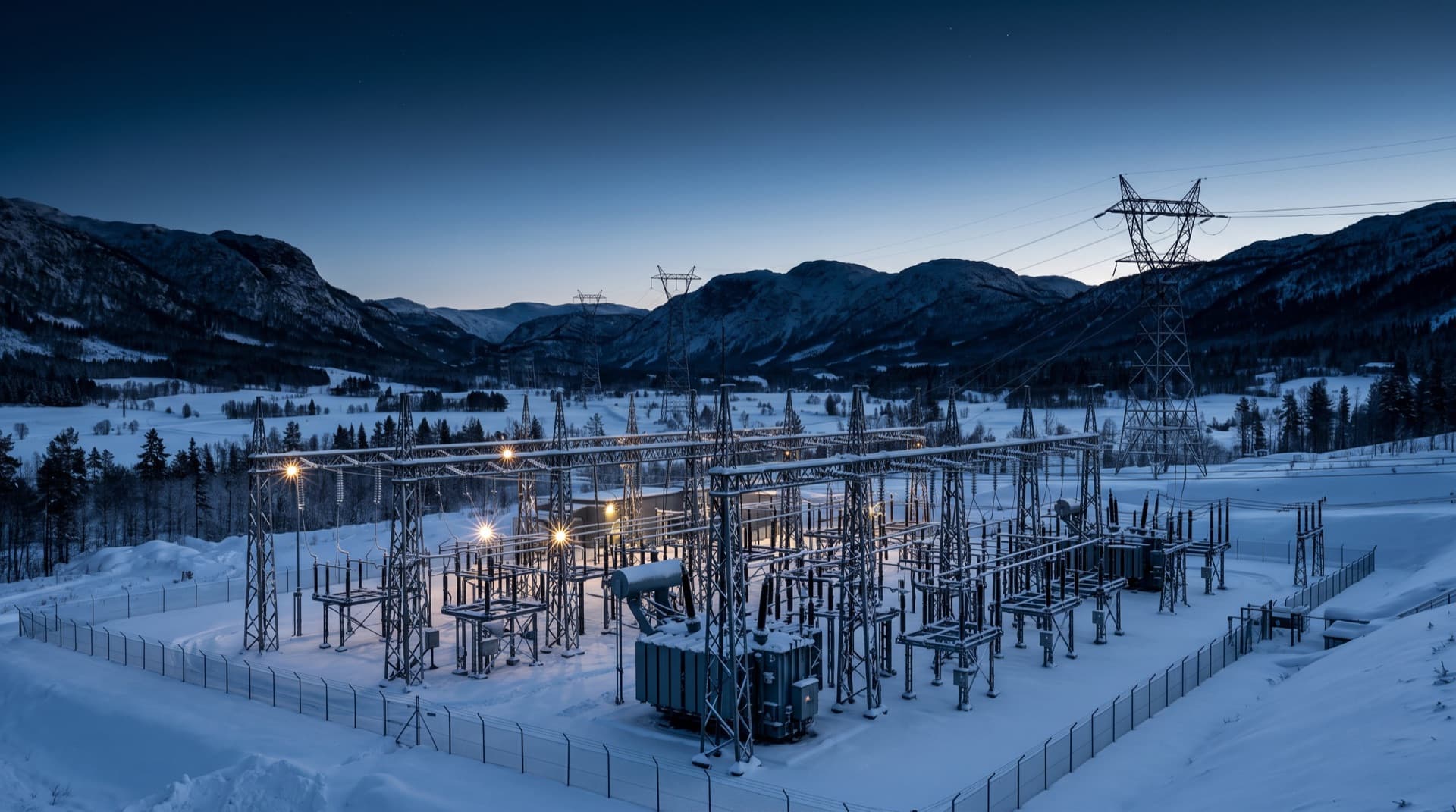
Stable, low-carbon power with a grid connection already in place, the scarce part of a new site. Read from public data in the Sauda case.
Biomethane
Capacity in standard cubic metres per hour, metered injection and guarantees of origin: the same pattern of contracted output and verified delivery, in gas.
Firm clean power still to come
Buyers of compute already sign for power that does not exist yet. These are the companies’ own plans and targets, not deliveries.
- Published · company planMicrosoft and Helion
Power purchase agreement signed in May 2023 for a fusion plant in Washington state, targeted online in 2028 and at 50 MW or more after a one-year ramp-up.
CNBC, 10 May 2023 - Published · company planGoogle and Commonwealth Fusion Systems
200 MW bought in June 2025 from the first ARC plant in Virginia, designed for 400 MW and expected on the grid in the early 2030s.
CFS, 30 June 2025 - Published · company planProxima Fusion
€411 million raised in July 2026 for a stellarator programme in Germany: the Alpha demonstrator targeted for the early 2030s, a first power plant later that decade.
Proxima Fusion, 7 July 2026
A register of long-term clean-power contracts for AI (fusion, small reactors, geothermal and large renewable agreements), each with its megawatts, dates and conditions, would follow the same rule as the rest of InfraGrid: a link for every figure, and plans marked as plans.
What InfraGrid will not do
- Issue tokens or tradable claims without an authorised partner and the licences they need.
- Broker futures or capacity, or take payment from the providers it shows.
- Promise returns, or present a plan, a target or a simulation as a measurement.
This page describes a direction for a product in development. It is not an offer and not investment advice. See the thesis and Trust & method.